Wisdom Tooth Extraction
Wisdom Tooth Extraction is available at these locations:
Last to develop and first to cause trouble, wisdom teeth often arrive without enough room to come in properly. When that happens they can become impacted, which opens the door to pain, infection, and damage to the teeth beside them. At Aesthetic Dentistry, our doctors handle wisdom tooth removal safely and comfortably, with sedation options to keep you relaxed from start to finish.
What it is
The surgical removal of one or more wisdom teeth (third molars) that have become impacted, only partially erupted, or troublesome for the teeth around them.
Who it's for
Most often teens and young adults, typically ages 17 to 25, whose wisdom teeth are impacted, painful, infected, or crowding their other teeth.
How we help
A digital X-ray evaluation up front, sedation options for your comfort, skilled surgical technique, and detailed post-op instructions to smooth the recovery.
Pain or swelling toward the back of your mouth? It may be time to have your wisdom teeth evaluated.
Do You Need Your Wisdom Teeth Removed?
Somewhere between ages 17 and 25, the third molars known as wisdom teeth usually make their appearance. If the jaw has no room to spare, they can end up impacted, stuck below the gum line or angled sideways. From there, an impacted wisdom tooth can press on its neighbors, nudging them out of position, inviting cavities, or undermining their bone support.
Removal is not always the answer. Our doctors read your X-rays first and recommend extraction only when it is genuinely needed to protect your oral health.
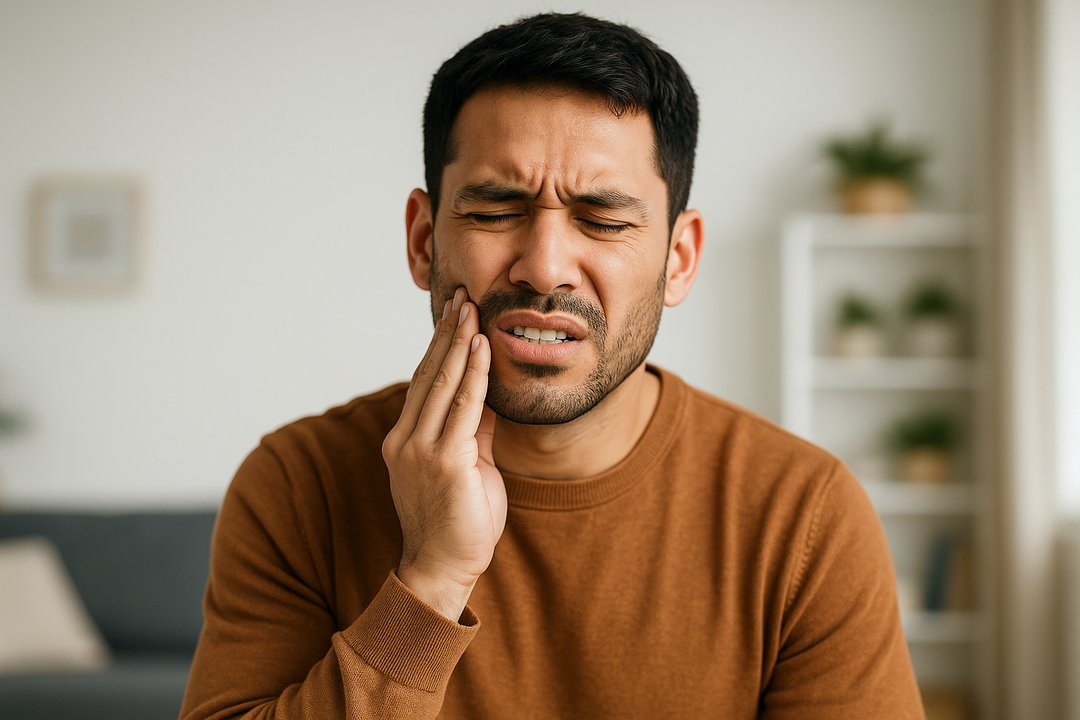
Signs Your Wisdom Teeth Need Attention
- Pressure or aching deep in the back of your jaw
- Gums behind your last molars that look swollen or red, or feel tender
- Trouble opening your mouth all the way
- A bad taste or persistent bad breath near the back teeth
- One-sided headaches or earaches
- A flap of gum tissue partly covering a tooth as it erupts
- Your other teeth starting to crowd or shift
What Happens if Impacted Teeth Are Left Untreated
- Infection: Bacteria slipping in around a partially erupted tooth can spark a painful infection (pericoronitis)
- Cysts: A fluid-filled sac may grow around an impacted tooth and damage the jawbone and nerves
- Damage to neighbors: The pressure can leave adjacent molars with cavities or lost bone
- Crowding: Wisdom teeth can shove other teeth out of alignment
- Gum disease: The hard-to-clean pockets around impacted teeth turn into havens for bacteria
When to call us: Severe pain, swelling that spreads into your cheek or neck, trouble swallowing, fever, or pus draining near the back of your mouth.
Seek emergency care if swelling in the face starts to affect your breathing or swallowing, or if a high fever leaves you unable to open your mouth.
The Extraction Procedure
Procedure Steps
- Evaluation: our doctors study your X-rays to read the position and condition of each wisdom tooth
- Anesthesia: Local anesthetic numbs the area, and sedation is on offer for anxious patients or complex extractions
- Access: For an impacted tooth, a small incision in the gum exposes the tooth and the bone around it
- Removal: The tooth comes out carefully, sometimes in sections so as little bone as possible is disturbed
- Closure: The site is cleaned and, to aid healing, may be closed with dissolvable stitches

Sedation Options
- Local anesthesia: The go-to for straightforward extractions; you stay awake yet feel no pain
- Nitrous oxide: A mild sense of relaxation while you remain conscious and responsive
- Oral sedation: A prescription pill taken beforehand for deeper relaxation, with a driver required
- Read more about our sedation dentistry options
Nervous about the procedure? Several sedation options keep you comfortable from start to finish.
Recovery & What to Expect
Recovery Timeline
- Day 1: Rest, hold ice packs to the area, and take your prescribed medications; a little bleeding and swelling are normal
- Days 2–3: Swelling usually peaks and then starts to ease, so keep to soft foods like yogurt, soup, and applesauce
- Days 4–7: Most patients feel a good deal better and can ease back to normal foods as comfort allows
- Weeks 1–2: The stitches dissolve on their own; steer clear of straws, smoking, and vigorous rinsing to avoid dry socket
- Full healing: The site closes over 3–4 weeks, and the bone underneath fills in completely across several months

Visit Steps
- Consultation: our doctors look over your mouth and X-rays to decide whether extraction is called for
- Planning: Before scheduling, we talk through the procedure, your sedation options, and the costs
- Procedure day: Come with a driver if you are being sedated; the extraction usually runs 30–60 minutes
- Post-op review: We walk you through detailed recovery instructions and hand over any prescriptions you need
- Follow-up: We may set a check-up visit to confirm everything is healing as it should
Helpful Tips
- Pick up plenty of soft foods ahead of your procedure day
- Plan on 2–3 days away from work or school to recover
- Sleep with your head propped up on extra pillows to keep swelling down
- Alternate ice packs on your cheeks, 20 minutes on and 20 minutes off
- For at least 5 days, skip straws, forceful spitting, and smoking, any of which can trigger a painful dry socket
- Starting the day after surgery, rinse gently with warm salt water
Frequently Asked Questions
During wisdom tooth extraction you should feel no pain at all. The area is fully numbed with local anesthetic first, and sedation is available for extra comfort, so most patients are surprised by how uneventful the procedure itself feels. What you notice is some pressure and movement rather than pain.
Once the anesthesia wears off, it is normal to have moderate soreness and swelling for a few days, usually peaking around the second or third day before easing. Prescribed or over-the-counter pain medication keeps it well in check, and cold compresses, rest, and soft foods make the first few days after wisdom tooth extraction much more comfortable.
Often, yes. When all four wisdom teeth are likely to cause problems, taking them out together means a single procedure, a single recovery period, and one round of sedation rather than going through the process more than once. For many patients, especially teens and young adults, that is the most efficient and comfortable path.
That said, it is not the only option. When only one or two wisdom teeth are actually impacted or causing trouble, our doctors may suggest removing just those. The decision comes down to what your X-rays show about the position and condition of each tooth, and we will talk through the best approach for your situation before anything is scheduled.
Within 4–7 days most patients feel a lot better after wisdom teeth removal. Swelling tends to crest on days 2–3 and then settles down, and by the end of the first week most people are easing back toward their normal routine and diet.
The deeper healing happens more gradually. The soft tissue over the sockets takes roughly 2–3 weeks to close fully, and the bone underneath fills in over several months without you noticing. To keep recovery on track, plan a couple of low-key days right after surgery, and protect the sites by avoiding straws, smoking, and vigorous rinsing during that first stretch.
Dry socket happens when the blood clot that forms over the extraction site gets dislodged too soon, leaving the bone and nerves underneath exposed. It usually announces itself as an intense, throbbing pain a few days after surgery, and because wisdom teeth sit at the back of the lower jaw, they are among the more common sites for it. It is treatable, so call us if the pain suddenly worsens instead of improving.
You can head it off by protecting the clot. For at least 5 days after wisdom teeth removal, avoid:
- Drinking through straws and any forceful sucking.
- Smoking and other tobacco use.
- Spitting forcefully and vigorous rinsing.
Following the rest of your post-op instructions closely cuts the risk sharply, and gentle salt-water rinses are fine starting the day after surgery.
Evaluation usually happens in the mid-to-late teens, when wisdom teeth start to appear on X-rays and we can see whether there is room for them. Catching them early lets us plan ahead rather than wait for a problem to develop.
Between ages 17 and 25, before the roots have fully formed and the surrounding bone has hardened, extraction tends to be easier and recovery quicker, which is why this window is often recommended. Even so, there is no strict cutoff: wisdom teeth can be removed at any age when they are impacted, infected, or crowding the teeth around them, and many adults have it done later in life without trouble.
Most patients give themselves 2–3 days to recover before heading back to work or school. After a simple extraction of a fully erupted wisdom tooth, some feel up to light activity the very next day, while surgical removal of impacted teeth generally calls for a few days of rest as the swelling settles.
It helps to plan the timing around your week if you can, since a quiet weekend often covers the bulk of the recovery. Whatever you do, hold off on strenuous physical activity and heavy lifting for about a week, because raising your blood pressure too soon can restart bleeding or disturb the healing sites.
Several things factor into the cost of wisdom tooth extraction: how many teeth come out, whether each one is a simple or a surgical extraction, the position of any impacted teeth, and which sedation option you choose. A single, fully erupted tooth is more straightforward than four impacted ones removed under deeper sedation, so the range can be wide.
Most dental insurance plans cover part of wisdom tooth removal, and we give you a detailed estimate before scheduling so there are no surprises. For any portion not covered, we offer financing options for flexible payment. Because impacted wisdom teeth tend to cause more, and costlier, problems the longer they stay, addressing them at the right time often saves money down the road.
There is no upside to letting wisdom tooth pain build. An early evaluation can prevent complications and ease your recovery.