Root Canal Therapy
Root Canals is available at these locations:
When a tooth is infected or deeply decayed, a root canal is often what stands between saving it and losing it. More than 15 million root canals are performed each year in the United States, which makes this one of dentistry's most common and most successful treatments. At Aesthetic Dentistry, modern technology and gentle techniques keep root canal therapy comfortable and stress-free from start to finish.
What it is
Inside each tooth is soft pulp, or nerve tissue. This treatment clears out the infected or damaged pulp, then seals the tooth so infection can't return.
Who it's for
Anyone dealing with severe pain, swelling, or sensitivity, or whose tooth has deep decay, a crack, or a history of repeated dental work.
How we help
Digital imaging pinpoints the problem, local anesthesia keeps you comfortable during treatment, and a crown afterward rebuilds long-lasting strength.
Severe toothache or lingering sensitivity? Call us right away for an emergency evaluation.
Why You Might Need a Root Canal
Every tooth holds a core of soft tissue called the pulp, home to its nerves and blood vessels. A deep cavity, a crack, or an injury can break through the outer tooth and let bacteria reach that pulp, where they trigger an infection.
Left alone, the infection works its way down, often forming a painful abscess at the root tip and, in time, costing you the tooth. A root canal clears out the infected tissue, cleans the inner chamber, and seals it, preserving the tooth's structure while shutting off the source of your pain.

Signs You May Need a Root Canal
Infected Tooth Symptoms
- Hot or cold sensitivity that lingers after the source is gone
- A throbbing or severe toothache
- Tenderness when you bite down or chew
- Swelling that shows up in the gums, face, or jaw
- A tooth that has darkened or changed color
- A small pimple-like bump on the gum near the tooth
- In some cases no symptoms at all, with the problem visible only on an X-ray
Benefits of Saving Your Tooth
- Full chewing power: Your natural bite force and function stay intact
- Natural look and feel: Once restored, the tooth blends in seamlessly
- Protected neighbors: Surrounding teeth won't shift or take on extra stress
- Preserved jawbone: Leaving the root in place keeps the bone from receding
- Lower cost: Keeping a tooth usually costs less than pulling and replacing it
When to call us: A severe toothache, swelling, temperature sensitivity that drags on, or pain that wakes you at night all point to possible infection and deserve prompt attention.
Seek emergency care right away if facial swelling reaches the eye or neck, if breathing or swallowing becomes difficult, or if you develop a high fever.
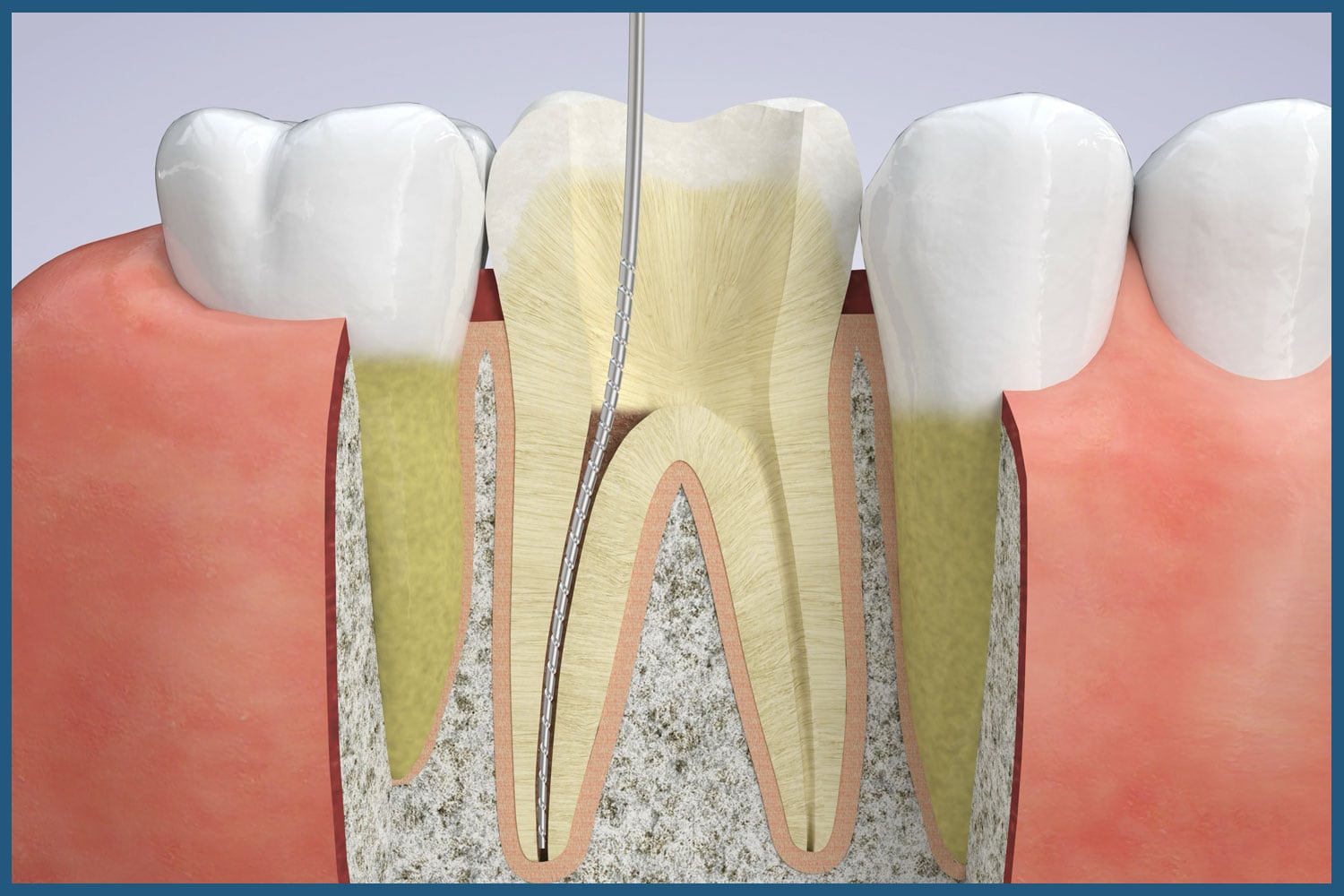
Stages of Root Canal Therapy
The Procedure
- Numbing: We fully numb the tooth, then make a small opening through the crown to reach the inner chamber.
- Cleaning: The infected pulp comes out, and each root canal is carefully shaped, cleaned, and disinfected, sometimes with medication placed inside.
- Sealing: A rubber-like biocompatible material fills the canals, sealing them off so reinfection can't take hold.
- Restoring: We rebuild the tooth with a filling and, in most cases, a dental crown that strengthens and protects it for years to come.
Nervous about root canal pain? Most patients tell us it feels no different from having a filling done.
What to Expect at Your Visit
Visit Steps
- Diagnosis: An exam and X-rays confirm whether root canal therapy is the right call
- Treatment plan: our doctors walk you through the procedure, timeline, and cost before anything begins
- Procedure: Most root canals wrap up in a single visit lasting 60–90 minutes
- Follow-up: A crown appointment usually follows 2–3 weeks later to permanently restore the tooth
Helpful Tips
- If we prescribe antibiotics, take them before your appointment as directed
- Have a good meal first, since numbness can linger for a few hours afterward
- Expect mild tenderness for 2–3 days, which over-the-counter pain relief handles easily
- Hold off on chewing with the treated tooth until your permanent crown is in place
- With the nerve removed, the tooth no longer senses temperature, but it otherwise works normally
Frequently Asked Questions
Here's the part that surprises people: a root canal is designed to relieve the severe pain an infection causes, not add to it. The ache that brings most patients in comes from the inflamed, infected nerve inside the tooth, and the procedure removes that tissue at its source. Local anesthesia fully numbs the area first, so during treatment you feel mild pressure at most, much like getting a filling.
Modern instruments and techniques have made the procedure faster and gentler than its old reputation suggests. Whatever tenderness follows tends to be mild, lasts only a couple of days, and responds well to over-the-counter pain relief. If anxiety is part of what worries you, tell us ahead of time and we can talk through comfort options so your root canal feels manageable from start to finish.
Plan on a single appointment of 60–90 minutes for most root canals. The exact time depends on which tooth is involved: a front tooth with a single canal goes quickly, while a back molar with several narrow canals takes longer to clean and seal thoroughly. We never rush this step, since taking the time to disinfect every canal is what protects the tooth for the long term.
Teeth with complex or curved root anatomy occasionally call for a second visit, and our doctors will let you know what to expect before starting. When a crown is needed afterward to fully restore the tooth, that is typically scheduled as a separate, shorter appointment, so each stage of your root canal gets the attention it deserves.
A tooth infection will not resolve on its own; it keeps spreading. Once bacteria reach the pulp, your body cannot clear them out without treatment, because the blood supply that would normally fight infection has been compromised. That progression can bring on a painful abscess, bone loss around the tooth root, and eventually loss of the tooth itself.
A root canal interrupts that cycle by removing the infected tissue and sealing the tooth against reinfection. Putting it off rarely makes things simpler; more often it turns a tooth that could have been saved into one that has to be extracted and replaced. In rare cases, an untreated dental infection travels to other parts of the body and becomes a serious health concern, which is why lingering pain or swelling deserves prompt attention.
With good oral hygiene and regular dental checkups, a properly treated and restored tooth can last the rest of your life. A root canal removes the nerve but leaves the tooth itself in place, so it keeps functioning as part of your natural bite. The biggest factor in how long it lasts is how well the tooth is protected afterward.
That is why adding a crown over the tooth after treatment matters so much: it caps a tooth that has been hollowed out and made more brittle, and it guards against the cracks that are the most common reason a treated tooth eventually fails. Keep brushing and flossing, avoid using the tooth to chew ice or open packaging, and stay on top of your checkups, and your root canal has every chance of lasting decades.
In nearly every case, keeping your natural tooth wins out, and a root canal is what makes that possible. Nothing replaces a natural tooth quite as well as the real thing: it protects your natural bite, keeps neighboring teeth from drifting into a gap, preserves the jawbone around the root, and spares you the cost and multiple appointments that tooth replacement involves.
Extraction enters the conversation only when a tooth is too damaged or decayed to save, or when too little structure remains to support a restoration. When that is the case, we will be honest with you and walk through replacement options such as an implant or bridge. But whenever a root canal can save the tooth, that is almost always the better long-term choice.
Usually, yes. Because a root canal removes the nerve and inner tissue, the tooth is left hollower and more brittle than it was, especially the molars that do the heavy lifting when you chew. A dental crown caps the tooth, restores its full strength, and guards against the fractures that are the leading cause of a treated tooth failing later on.
Front teeth are sometimes the exception. They take less force than back teeth, so depending on how much healthy structure remains, they can occasionally be restored with a filling alone. After your root canal, our doctors will look at how much of the tooth is left and recommend the restoration that gives it the best long-term odds.
There is no single price for a root canal, because a few things shape the total:
- Which tooth needs treatment, since a front tooth with one canal is less complex than a molar with several.
- Whether additional work, such as a crown to restore the tooth afterward, is involved.
- Your dental insurance, which covers part of root canal therapy under most plans.
You will get a detailed estimate before we begin, with no surprises once treatment is underway, and we work with most insurance plans at our Orland Park, Frankfort, and Oak Lawn offices. For any portion not covered, ask about our financing options for flexible payment plans. Keep in mind that saving a tooth with a root canal is usually less expensive than extracting it and paying to replace it later.
Root canals succeed more than 95% of the time, which makes them one of the most predictable procedures in dentistry. When a tooth is treated and then properly restored with a crown, it has an excellent chance of staying healthy and comfortable for many years.
A small share do need retreatment, usually when a new infection sets in, when a canal with unusual anatomy was difficult to seal completely, or when the tooth cracks after treatment. The encouraging part is that most of these situations can be addressed: a root canal can often be redone, or a specialist procedure can clear up lingering infection, so a tooth that gives trouble can frequently still be saved rather than lost.
Tooth pain shouldn't run your life. Root canal therapy can rescue your tooth and deliver lasting relief.