Full Mouth Restoration
Missing All Teeth (All-on-4) is available at these locations:
If your teeth are mostly or entirely gone, or if loose, uncomfortable dentures have worn out their welcome, there is a better answer: implant-supported restorations that stay put and give you a permanent, beautiful smile. At Aesthetic Dentistry, our doctors offer full-arch implant bridges and implant-supported overdentures that look, feel, and function like natural teeth, so you can eat the foods you love, speak with confidence, and smile without a second thought.
What it is
A full set of replacement teeth held by strategically placed dental implants. It can take the form of a fixed bridge permanently attached to the implants, or a removable overdenture that snaps securely into place.
Who it's for
Anyone whose teeth are failing or mostly gone, and anyone worn down by loose, uncomfortable traditional dentures who is ready for a stable, permanent solution.
How we help
Because every patient's needs and jawbone differ, we plan each case individually, using advanced CT imaging to place implants precisely and designing every restoration to fit.
Done with dentures? Implant-supported teeth stay put and feel completely natural.
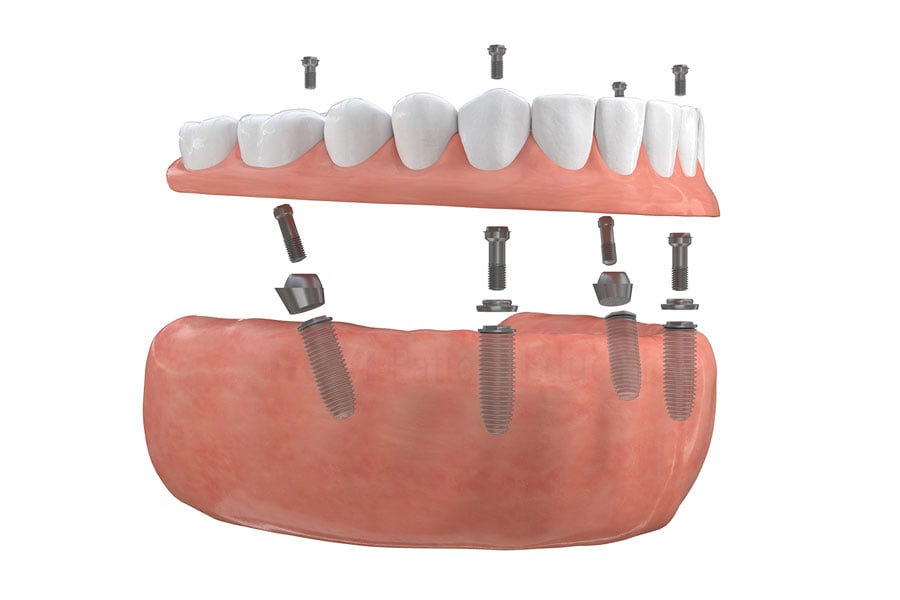
Full-Arch Implant Bridge
- A complete set of teeth fixed permanently onto 4–6 dental implants per arch
- Never comes out: no removing, no adhesives, no slipping at any point
- Bite and chew at full strength, with every food still on the table
- Through the implant posts, it stimulates and preserves the jawbone
- Designed around ideal tooth shape, size, and color, it looks completely natural
- Depending on the technique, you may hear it called "All-on-4" or "teeth in a day"
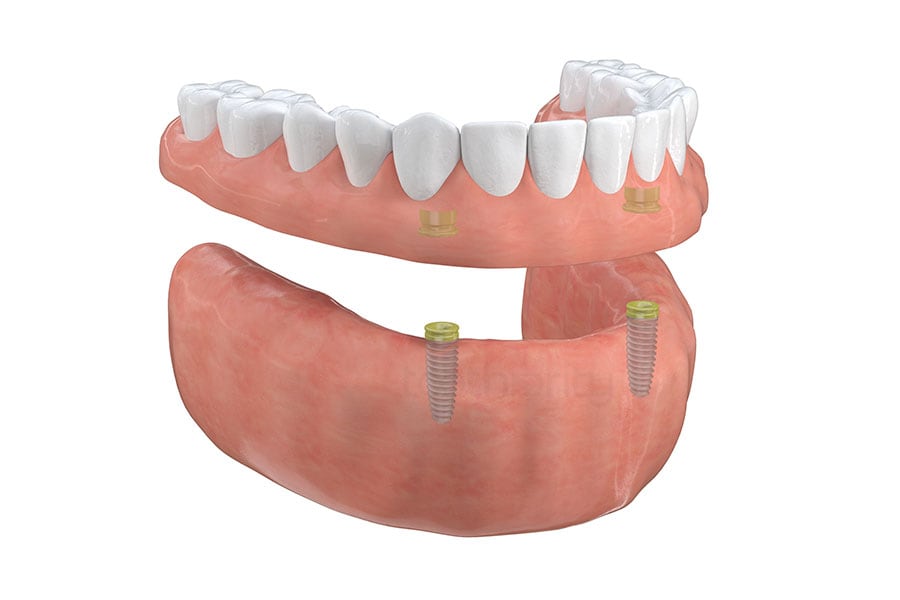
Implant-Supported Overdentures
- A full denture that snaps securely onto dental implants for comfort and stability
- At home, you take it out to clean and maintain it, then click it back into place
- Without the slipping, rocking, or adhesives of traditional dentures, it holds far more securely
- Eat, drink, and speak with confidence all day long
- our doctors fit a supporting structure to the implants that your overdentures click onto
- It is a cost-effective alternative to a full-arch fixed bridge
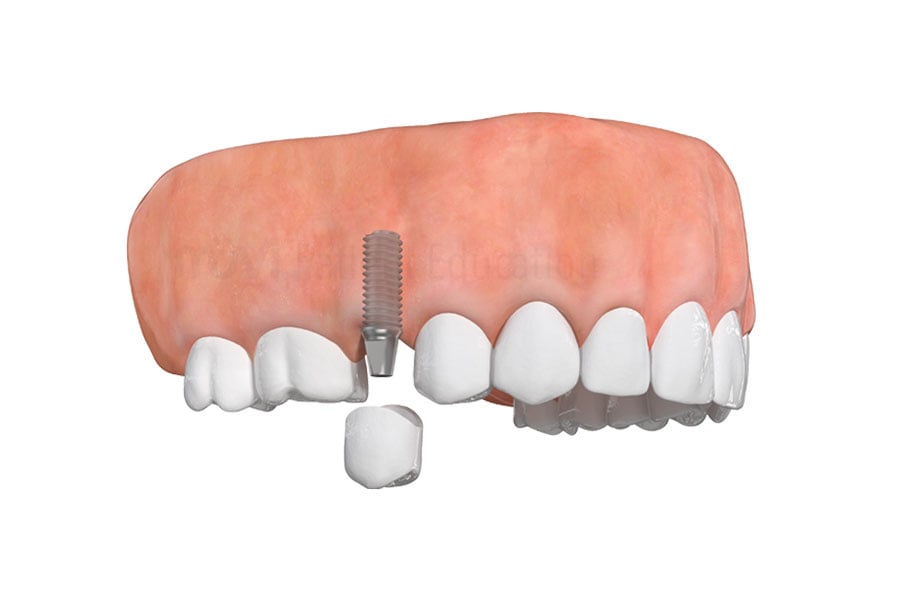
Implants vs. Traditional Dentures
- Bone preservation: By stimulating the jawbone, implants prevent the deterioration that sets in beneath traditional dentures
- Stability: Anchored to the bone, implant restorations do not slip, shift, or need messy adhesives
- Comfort: No sore spots where loose dentures rub against the gums
- Eating: You bite and chew normally, whereas traditional dentures cut chewing capacity by up to 75%
- Taste: An implant bridge leaves the roof of your mouth uncovered, so food keeps its full flavor
- Appearance: Implants hold off the sunken, collapsed look that follows as bone melts away under traditional dentures
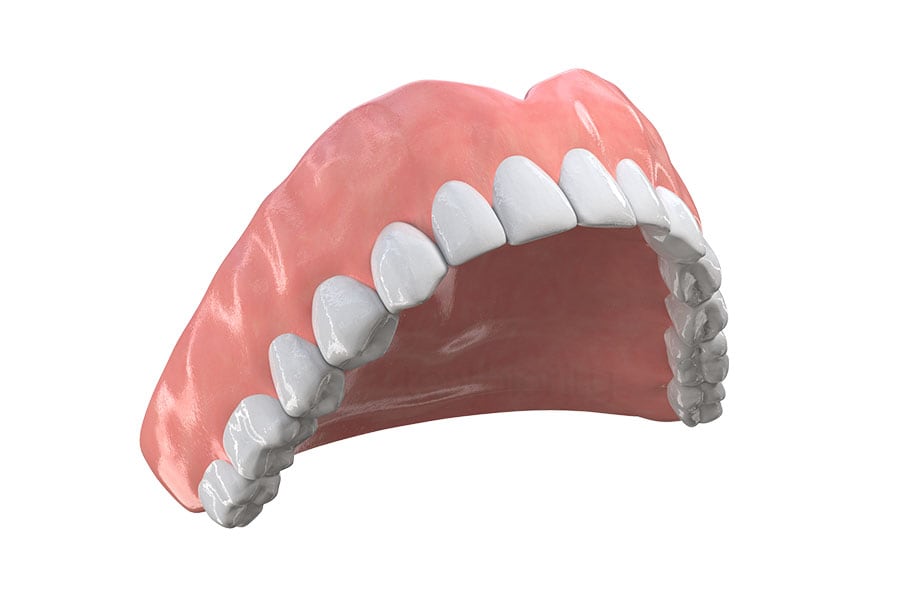
Problems with Traditional Dentures
- With no tooth roots present, the jawbone resorbs and shrinks, and dentures loosen over time
- As the bone changes, traditional dentures need constant adjustment and eventually replacement
- Keeping them in place often means relying on sticky adhesives
- Eating, speaking, and tasting food all become harder for many patients
- The facial collapse and aged look come from the underlying bone loss
- By restoring the root along with the crown, implant-supported restorations solve every one of these problems
Among tooth replacements, only dental implants preserve your jawbone and hold your facial structure in place.
What to Expect at Your Visit
Visit Steps
- Comprehensive evaluation: Using digital X-rays and CT scans, our doctors examine your mouth and jawbone
- Custom treatment plan: Your bone density, the number of implants needed, and the restoration type shape a personalized plan
- Implant placement: Titanium implants are surgically placed, with sedation available for your comfort
- Healing: Over several months the implants integrate with the jawbone, and temporary teeth may carry you through that time
- Final restoration: Your custom bridge or overdenture is permanently placed or fitted
Helpful Tips
- No two plans are alike; your specific situation drives the number of implants, the healing time, and the cost
- Where significant bone loss has occurred, bone grafting may come before implant placement
- Temporary teeth can bridge the healing period so you are never left without a smile
- Back up successful healing by following all of your post-surgical care instructions
- Keep your hygiene excellent around the implant restorations
- Ask about flexible financing options that make full mouth restoration affordable
Frequently Asked Questions
Most full-arch restorations call for 4 to 6 implants per jaw, with the exact count depending on your bone density and the type of restoration you choose. A fixed bridge and a snap-in overdenture do not always need the same number of supports.
This is the principle behind techniques like All-on-4, where a full set of teeth is anchored to as few as four strategically placed implants per arch. The implants do not replace every missing tooth one for one; they act as sturdy foundations that carry the whole arch. Drawing on your CT imaging, our doctors will pin down the optimal number of full-arch implants at your consultation.
Sometimes. With certain techniques, including All-on-4, a temporary set of teeth can be attached to the implants the same day they are placed, which is why you may hear the approach described as teeth in a day. You leave with a full smile rather than going without teeth during healing.
It is important to know those same-day teeth are temporary. The permanent, final restoration follows once the implants have fully integrated with the jawbone, usually 3–6 months later, when the foundation is strong enough to carry teeth you will use at full strength for years. Whether you are a candidate for same-day teeth depends mainly on your bone, which our doctors confirm from your imaging.
Both work beautifully, and the right choice is personal. A full-arch fixed bridge stays permanently attached and never comes out, giving the closest feel to natural teeth and the strongest, most stable bite. An implant-supported overdenture snaps securely onto the implants but lifts out for cleaning, which some patients prefer and which is often the more cost-effective of the two.
Cost, your bone density, how much support your jaw can provide, and personal preference all play in. Many patients like that a fixed bridge needs no daily removal, while others value how easy an overdenture is to clean, and our doctors will walk you through the tradeoffs and help you choose the full mouth restoration that fits your life.
Years in dentures often bring significant bone loss, because a traditional denture sits on the gums and does nothing to stimulate the bone underneath, so it slowly resorbs. The good news is that implant treatment usually remains possible even after a long time in dentures.
Bone grafting can rebuild the jawbone into a solid foundation to support implants where volume has been lost. In other cases, careful, strategic placement, including the angled-implant approach used in All-on-4, works with the bone you already have and can reduce or avoid the need for grafting. Your CT scan tells our doctors exactly what you are working with, so the plan is built around your real anatomy.
From implant placement to the final restoration, the full-arch process usually runs 4 to 8 months, and 9–12 months if bone grafting is part of the plan. Most of that time is healing, while the implants fuse with the jawbone in a process called osseointegration, which simply cannot be rushed if the result is going to last.
The timeline feels longer on paper than it does in practice, because temporary teeth see you through the healing time, so you are never without a smile and can eat and speak throughout. With same-day techniques such as All-on-4, those temporaries can even go on the day of surgery, and our doctors map out the specific stages and dates for your case at the consultation.
Full mouth restoration is an individualized treatment, so the cost varies considerably from one patient to the next. The main factors include:
- The number of implants your arch requires.
- The type of restoration, whether a fixed full-arch bridge or a snap-in overdenture.
- Whether bone grafting is needed to prepare the jaw first.
- The materials chosen for your final teeth.
The investment is real, but implant-supported teeth can last a lifetime, which makes them more economical than decades of relining and replacing traditional dentures, and far better for your bone and your quality of life. You receive a detailed estimate at your consultation, and we offer flexible financing options to make full mouth restoration achievable.
Caring for implant-supported teeth is straightforward, and it differs a little by restoration type. Clean a fixed full-arch bridge much as you would natural teeth: brush twice a day and run specialized floss, interdental brushes, or a water flosser around and beneath it to keep the gum tissue around the implants healthy.
An overdenture is even simpler, since it comes out each night so you can clean both the appliance and your gums thoroughly. Either way, the implants themselves cannot get cavities, but the surrounding gums and bone still need care, so regular dental checkups and cleanings keep your implants healthy for the long haul and protect your full mouth restoration for decades.
Put loose dentures behind you for good. Book your full mouth restoration consultation today.