Sleep Apnea Treatment
Sleep Apnea is available at these locations:
For millions of Americans, sleep apnea is a serious medical condition that never gets diagnosed. The disorder makes you stop breathing again and again through the night, which drains your rest, leaves you fatigued by day, and raises your risk of heart disease and stroke. At Aesthetic Dentistry, we fit custom oral appliances that help you breathe freely, sleep soundly, and wake up feeling refreshed, all without a bulky CPAP machine.
What it is
A sleep disorder in which breathing stops and starts over and over during the night, dropping oxygen levels and breaking up your rest.
Who it affects
An estimated 22 million Americans, with risk climbing alongside age, obesity, smoking, and family history. A great many cases never get diagnosed.
How we help
Screening, home sleep studies, and custom-fitted oral appliances that hold your airway open while you sleep.
Worn out even after a full night in bed? Sleep apnea could be the hidden cause.
Understanding Sleep Apnea
Obstructive Sleep Apnea (OSA)
- The most common type by far, behind the vast majority of sleep apnea cases
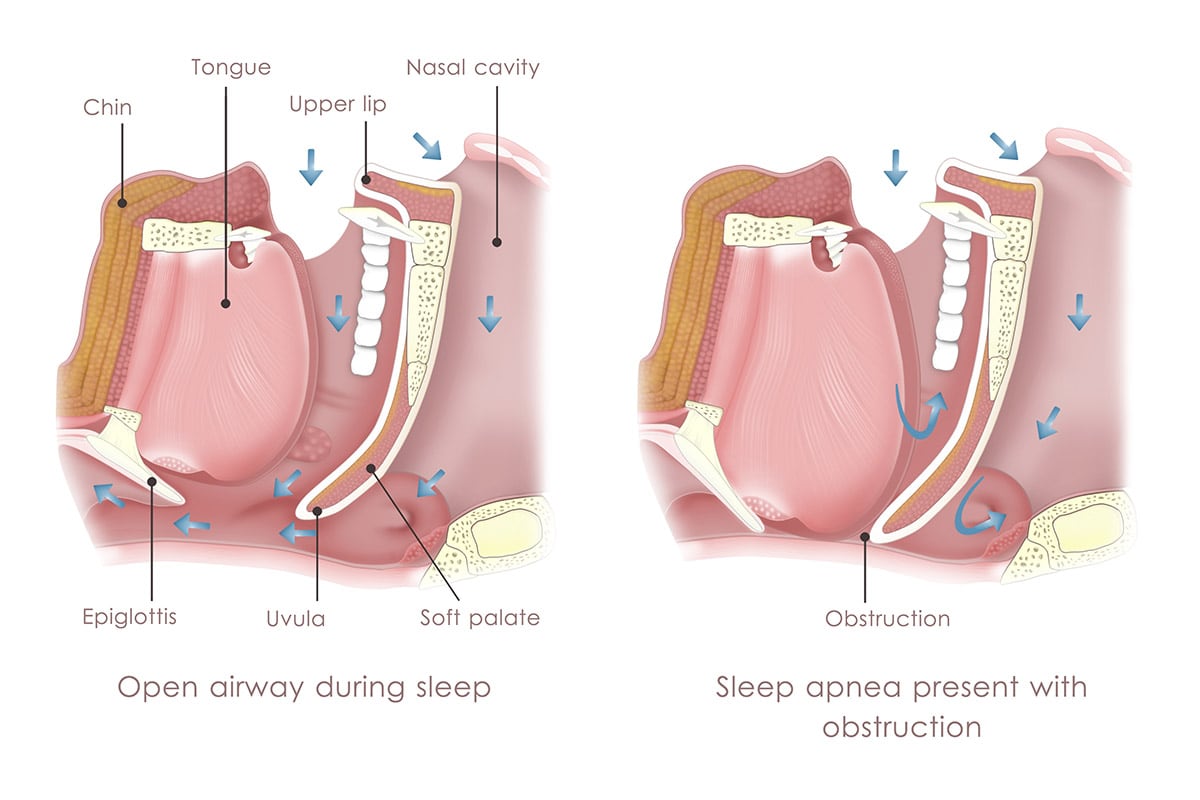
- It stems from a physical blockage of the upper airway during sleep
- Large tonsils, a large tongue, extra throat tissue, or jaw position can all cut off airflow
- Sensing the low oxygen, the brain briefly wakes you so breathing can restart
- Those interruptions can strike 5 to 30+ times per hour, robbing you of deep, restorative sleep
Central Sleep Apnea (CSA)
- Far rarer than obstructive sleep apnea
- It happens when the brain fails to signal the breathing muscles properly
- There's no physical airway blockage involved
- It often goes hand in hand with heart failure, stroke, or certain medications
- It can call for treatment approaches different from those used for OSA
Risk Factors, Symptoms & Consequences
Risk Factors
- Age: It affects 50% of people over 50
- Obesity: Extra weight carried around the neck and throat
- Smoking: Adds inflammation and fluid retention in the airway
- Family history: An inherited tendency toward narrower airways
- Anatomy: Large tonsils, a thick neck, a narrow throat
Common Symptoms
- Loud, chronic snoring broken by pauses
- Gasping or choking in your sleep
- Restless sleep that never feels refreshing
- Heavy daytime sleepiness and fatigue
- Trouble concentrating along with memory lapses
- Morning headaches and a dry mouth
- Irritability and mood swings
Health Consequences
- High blood pressure: Repeated oxygen dips put strain on the cardiovascular system
- Heart disease & stroke: Risk rises significantly
- Type 2 diabetes: Disrupted sleep worsens insulin resistance
- Weight gain: Poor sleep throws off the hormones that regulate appetite
- Erectile dysfunction
- Accidents: From drowsy driving to impaired everyday function
When to seek help: Get evaluated for sleep apnea if your partner notices you stop breathing in your sleep, if daytime sleepiness is wearing you down, or if you wake up gasping or choking.
Untreated sleep apnea is a serious health risk. It has been tied to sudden cardiac events, stroke, and dangerous drowsy driving accidents.
Treatment Options
The right treatment hinges on the type and severity of your sleep apnea. When obstructive sleep apnea is mild to moderate, a custom dental appliance gives many patients a comfortable, effective alternative to CPAP.
Oral Appliance Therapy
- A custom-fitted device you wear during sleep that nudges the jaw and tongue forward to keep the airway open
- Comfortable, portable, and silent, with no mask, hose, or machine involved
- A strong fit for mild to moderate obstructive sleep apnea
- Also a help for patients who cannot tolerate CPAP
- Built from precise impressions of your teeth for a secure, comfortable fit
Other Treatment Approaches
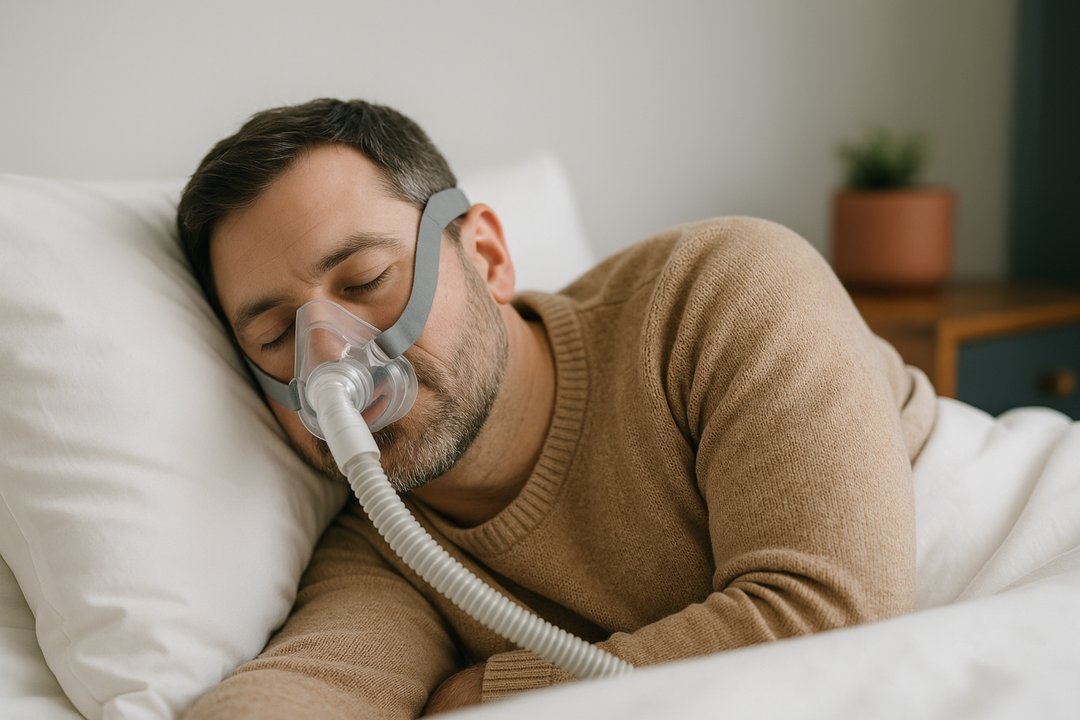
- CPAP therapy: A mask supplies continuous air pressure and remains the gold standard for moderate to severe OSA
- Lifestyle changes: Weight loss, sleep position training, and skipping alcohol before bed
- Surgery: Reserved for structural issues such as enlarged tonsils or a deviated septum that add to the obstruction
- Combination therapy: Some patients do best pairing an oral appliance with CPAP at a lower pressure setting
Struggling to stick with your CPAP? A custom oral appliance may be the comfortable alternative you need.
What to Expect at Your Visit
Visit Steps
- Screening: We review your symptoms, medical history, and risk factors for sleep apnea
- Sleep study: When it's warranted, we can set up a convenient home sleep study to diagnose your condition
- Treatment plan: Your results guide our recommendation, frequently a custom oral appliance
- Fitting: We take precise impressions to build your custom device for maximum comfort and effectiveness
Helpful Tips
- For 1–2 weeks before your visit, keep a sleep diary noting snoring, waking episodes, and daytime tiredness
- Ask your sleep partner to watch and report whatever they notice during your sleep
- Bring along any previous sleep study results or CPAP records
- After impressions, an oral appliance usually takes 2–3 weeks to fabricate
- Follow-up visits make sure the device fits well and your symptoms are improving
Frequently Asked Questions
Sleep apnea has a fairly recognizable set of warning signs, though they are easy to brush off as ordinary tiredness. The most common ones include:
- Loud, chronic snoring, often broken by silent pauses.
- Gasping or choking awake during the night.
- Excessive daytime sleepiness, even after a full night in bed.
- Morning headaches and a dry mouth.
- Trouble concentrating, memory lapses, and irritability.
One of the trickiest things about sleep apnea is that many people have no idea they have it. The breathing pauses happen during sleep, so it is usually a bed partner who notices them first. If any of these signs sound familiar, especially the witnessed pauses, it is worth getting evaluated.
Yes, within a defined role. A dentist trained in dental sleep medicine can provide oral appliance therapy for mild to moderate obstructive sleep apnea. These custom devices ease the lower jaw forward to keep the airway open during sleep, and for the right patient they are a comfortable, effective alternative to a CPAP machine.
What a dentist does not do is replace your physician. A definitive sleep apnea diagnosis comes from a sleep study, and for severe cases CPAP is usually the first-line treatment. That is why we work alongside sleep physicians: they handle diagnosis and the medical picture, and we provide and fine-tune the oral appliance. It is a team approach built around getting you the right treatment.
A sleep apnea oral appliance is a custom-fitted device that looks much like a sports mouth guard or an orthodontic retainer, and you wear it only while you sleep. By gently holding your lower jaw in a slightly forward position, it keeps the tongue and soft tissues at the back of the throat from collapsing into the airway, which is what causes the breathing interruptions of obstructive sleep apnea.
Because it is built from precise impressions of your own teeth, the appliance fits securely and comfortably. It is also small, portable, and silent, with no mask, hose, or electricity involved, which makes it easy to travel with. For many patients with mild to moderate sleep apnea, that comfort and simplicity is exactly why oral appliance therapy works: a device you will actually wear every night protects you far better than one that sits in a drawer.
For mild to moderate obstructive sleep apnea, oral appliances can be very effective. CPAP may control the most severe cases more completely, but its benefit depends entirely on consistent use, and many people struggle to tolerate the mask and hose night after night. Because an oral appliance is more comfortable and far less intrusive, patients tend to wear it more consistently, and a device used every night often delivers better real-world results than a CPAP that goes unused.
For severe sleep apnea, CPAP is generally still the first-line recommendation. Some patients also do best with both, pairing an oral appliance with CPAP at a lower, more tolerable pressure. The right answer depends on the severity of your sleep apnea and what you will realistically stick with, which is something we sort out together with your sleep physician.
A sleep study is the only way to definitively diagnose sleep apnea. A clinical exam and your symptoms can raise a strong suspicion, but the actual diagnosis, and the severity, has to be measured while you sleep. The good news is that for most people this no longer requires an overnight stay in a lab.
We can arrange a convenient home sleep study that monitors your breathing, oxygen levels, and sleep patterns from the comfort of your own bed. Once the results are in, we review them with you and, if sleep apnea is confirmed, map out a treatment plan, which for many patients means a custom oral appliance. If you suspect you have sleep apnea, that simple test is the place to start.
For some people, sleep apnea can essentially be resolved. When the condition is mild and tied closely to body weight, significant weight loss sometimes reduces or eliminates it, and treating a specific structural issue such as enlarged tonsils can do the same. So in certain cases the answer is yes.
For most patients, though, sleep apnea is better thought of as a condition that is managed rather than cured. Ongoing treatment with an oral appliance or CPAP keeps the airway open and the symptoms controlled, but the underlying tendency remains if treatment stops. The encouraging part is that this management is highly effective: consistent treatment restores healthy, restorative sleep and reduces the associated health risks, often dramatically.
Not always. Snoring and sleep apnea are related but not the same thing. Plenty of people snore simply because of their anatomy, sleep position, or nasal congestion, and never stop breathing at all. Snoring on its own is mostly a nuisance rather than a medical danger.
What raises the concern is the pattern. Loud, chronic snoring, especially when it comes with gasping, choking, or breathing pauses that a partner witnesses, is a strong indicator of sleep apnea and should be evaluated. If you are not sure which one you are dealing with, a home sleep study can tell the difference. Visit our Snoring page to learn more.
Untreated sleep apnea is far more than poor sleep; it is a genuine health risk. Each time breathing stops, oxygen levels drop and the body is jolted awake to restart it, sometimes dozens of times an hour. Over months and years, that repeated strain significantly increases your risk of high blood pressure, heart attack, stroke, and type 2 diabetes.
The daily toll is just as real. Sleep apnea chips away at your quality of life through chronic fatigue, mood changes, and difficulty concentrating, and the resulting drowsiness makes driving genuinely dangerous. The reassuring side of all this is that treatment makes a real difference: managing sleep apnea with an oral appliance or CPAP can ease the strain it places on your body and improve how you feel and function each day, especially when it is used consistently.
Often, yes. Sleep apnea is a medical condition, so sleep studies and oral appliance therapy for a diagnosed case are frequently covered under medical insurance rather than dental insurance, though the specifics vary from plan to plan. Because it runs through medical benefits, the paperwork can look a little different from a routine dental claim.
Our team helps you make sense of that. At our Orland Park, Frankfort, and Oak Lawn offices, we review your benefits, explain what is likely to be covered, and handle the documentation that ties your treatment to your diagnosis. For any out-of-pocket portion, we offer financing options so that cost does not stand between you and better sleep.
Don't let sleep apnea rob you of rest and health. Call us today to learn how we can help you sleep better.