Snoring Solutions
Snoring Treatment is available at these locations:
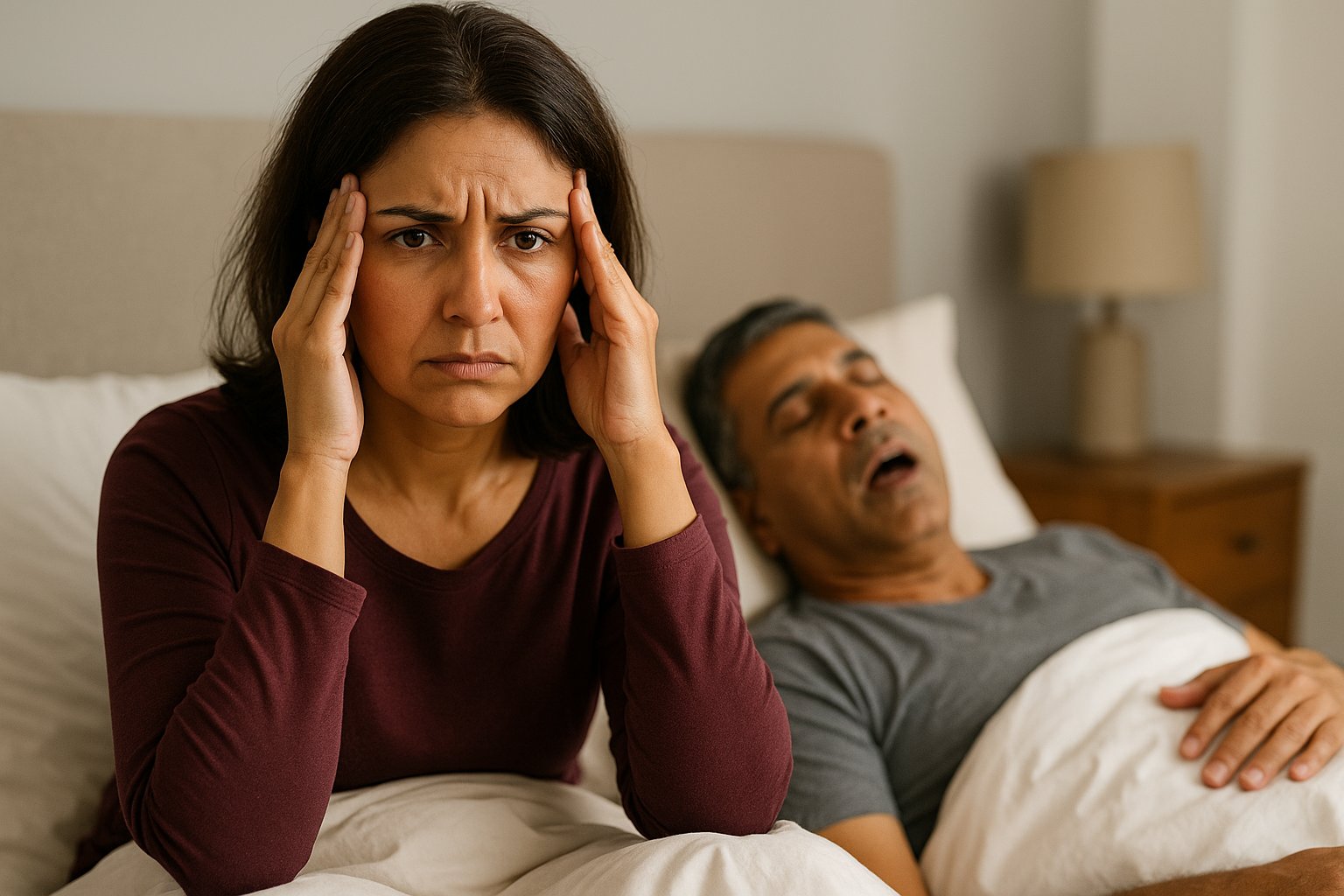
An occasional snore is nearly universal, but snoring night after night takes a toll on your sleep quality, your health, and your relationships. At Aesthetic Dentistry, our doctors offer proven solutions, custom oral appliances among them, that get at the root cause of snoring so you and your partner can rest better. And when your snoring points to sleep apnea, we can help with diagnosis and treatment.
What it is
Snoring is the sound of air passing relaxed throat tissues and setting them vibrating while you sleep. It runs the gamut from occasional and harmless to a warning sign of obstructive sleep apnea.
Who it's for
Anyone whose snoring is wrecking their own sleep or a partner's. If you snore loudly, drag through the day, or have been told you stop breathing at night, it's worth an evaluation.
How we help
Custom oral appliances that shift the lower jaw forward to hold the airway open during sleep. For many patients, they are a comfortable, effective alternative to CPAP.
Stop letting snoring run your nights. Book a consultation to explore your treatment options.
Is It Just Snoring or Sleep Apnea?
- Snoring can be a marker of sleep apnea, a potentially life-threatening condition that requires medical attention
- Ordinary snoring disturbs sleep quality far less than sleep apnea does, so if you're extremely fatigued during the day, the trouble may run deeper than snoring
- Sleep apnea brings repeated pauses in breathing during sleep, reducing oxygen levels and straining the heart
- A home sleep study can tell whether you have simple snoring or a sign of sleep apnea
- our doctors work alongside sleep physicians so you receive an accurate diagnosis and the right treatment
Common Causes of Snoring
- Age: By middle age and beyond, the throat narrows and muscle tone slips
- Anatomy: Men's air passages are narrower than women's, and traits like a narrow throat or enlarged adenoids can run in families
- Nasal and sinus problems: Blocked airways make breathing in harder and create a vacuum in the throat
- Weight: Excess fatty tissue paired with poor muscle tone feeds snoring
- Alcohol, smoking, and medications: Each relaxes the throat muscles further, so snoring grows louder
- Sleep position: Lying flat on your back lets throat tissue slacken and block the airway
Solutions for Snoring
Lifestyle Changes
- Lose weight: Even modest weight loss trims fatty tissue in the throat and can quiet or end snoring
- Exercise: Toning the body firms up the throat muscles too, which can mean less snoring
- Quit smoking: Smoke irritates the membranes in the nose and throat and blocks airways
- Avoid alcohol before bed: A nightcap relaxes the throat muscles and worsens snoring
- Establish regular sleep patterns: Steady bedtimes help you sleep better and snore less
- Change sleep position: Rolling onto your side keeps throat tissue from blocking the airway
Medical Treatment Options
- Custom oral appliances: A comfortable, easy-to-use dental device that holds your lower jaw or tongue forward during sleep to keep the airway open
- CPAP: Continuous Positive Airway Pressure pairs a bedside machine with a mask to keep the airway open, and it's regarded as the gold standard for sleep apnea
- Combination therapy: For some patients, an oral appliance plus CPAP delivers the best results
- our doctors specialize in custom oral appliances, a proven, comfortable alternative to CPAP for many patients with snoring and mild to moderate sleep apnea
The key to quieter, healthier sleep might be a custom oral appliance. Find out if it's right for you.
When Snoring Needs Attention
Warning Signs to Watch For
- You snore loudly and heavily and feel tired during the day
- You stop breathing, gasp, or choke while asleep
- You nod off at the wrong moments, mid-conversation or even during meals
- You wake to morning headaches, a dry mouth, or a sore throat
- You struggle with concentration, memory, or mood
- Notice any of these signs, and a home sleep study can help determine the cause
How Snoring Affects Your Life
- Relationship strain: A sleep-deprived partner may retreat to a separate bedroom, eroding intimacy and connection
- Daytime fatigue: Poor-quality sleep breeds irritability, scattered focus, and lower productivity
- Health risks: Chronic snoring, sleep apnea especially, is linked to high blood pressure, heart disease, and stroke
- Mental health: Going short on sleep feeds anxiety, depression, and trouble managing stress
- Treating snoring lifts more than your sleep; it lifts your overall quality of life and your relationships
Frequently Asked Questions
Occasional snoring is almost universal and rarely a problem on its own. Snoring becomes worth a closer look when it is loud and happens most nights, when it leaves you or your partner exhausted during the day, or when someone notices you gasp, choke, or stop breathing while you sleep. Those last signs in particular point beyond ordinary snoring.
When snoring comes with those red flags, it can be a marker of obstructive sleep apnea, which carries real health risks if left unaddressed. A home sleep study is a simple, comfortable way to find out whether you have harmless snoring or something that needs treatment. If your snoring is straining your health or your relationship, that is reason enough to have it evaluated.
A snoring oral appliance is a small, custom-made device that looks a lot like a sports mouthguard, and you wear it only while you sleep. It works by easing your lower jaw gently forward, which opens up the airway at the back of the throat. With more room for air to pass, the soft tissues stop vibrating, and that vibration is exactly what creates the sound of snoring.
Because the appliance is fitted to your own teeth, our doctors can dial in the position for both comfort and effectiveness, so it stays secure and feels natural through the night. For many people, a custom oral appliance reduces or even eliminates snoring, and unlike a CPAP it is quiet, compact, and easy to travel with.
For primary snoring and for mild to moderate sleep apnea, a custom oral appliance is highly effective, and it tends to win on the one factor that matters most in practice: people actually use it. CPAP can be powerful, but a fair number of patients find the mask and hose hard to live with, and an appliance that feels comfortable and slips into a travel bag is far more likely to be worn every single night.
For severe sleep apnea, CPAP may still be the recommended choice, and the two are not mutually exclusive. To sort out which fits your situation, our doctors work together with your sleep physician, weighing how severe the problem is against what you will comfortably keep up with night after night.
Yes, and it is worth paying attention to. A child who snores regularly, night after night, should be evaluated rather than assumed to be a heavy sleeper. In children, persistent snoring can point to enlarged tonsils or adenoids, allergies, or pediatric sleep apnea, which is more common than many parents realize.
The reason it matters is that untreated sleep-disordered breathing in children can affect more than rest. It has been linked to problems with growth, behavior, attention, and even academic performance, because the developing brain and body depend on deep, uninterrupted sleep. If your child snores loudly and often, mention it to your pediatrician or to us, so the cause of the snoring can be identified and addressed.
It can make a real difference. Excess tissue around the neck and throat is a common contributor to snoring, so even modest weight loss often reduces it and sometimes eliminates it altogether. Combined with regular exercise, which also helps tone the throat muscles, it is one of the most effective lifestyle changes you can make.
That said, weight is only one piece of the puzzle. Snoring has multiple causes, and anatomy, sleep position, nasal congestion, alcohol, and muscle tone all play a part, which is why weight loss helps some people far more than others. To find out what is actually driving your snoring, our doctors can evaluate the likely causes and recommend the treatment most likely to work for you, whether that is lifestyle changes, a custom oral appliance, or a combination.
It depends on the underlying cause. Snoring on its own, with no diagnosed medical condition behind it, is often considered elective and may not be covered. When snoring is tied to diagnosed obstructive sleep apnea, however, medical insurance frequently covers the sleep study and treatment, including a custom oral appliance, since it is then treating a medical condition.
Coverage varies quite a bit from plan to plan, so the only way to know for sure is to check the specifics. Our team helps you understand your benefits before treatment and walks you through what to expect. For any out-of-pocket portion of your snoring treatment, we offer financing options to keep it manageable.
Better sleep starts with a conversation. Book your snoring evaluation today.