Dental Implants
Missing One Tooth (Single Implant) is available at these locations:
The gap from a single missing tooth is the part you see; the bone loss, the drifting of nearby teeth, and the trouble chewing are the part you don't. At Aesthetic Dentistry, our doctors close that gap with dental implants that look, feel, and function just like natural teeth. No other tooth replacement preserves your jawbone and guards the health of the surrounding teeth the way an implant does, and the result is a permanent, confident smile.
What it is
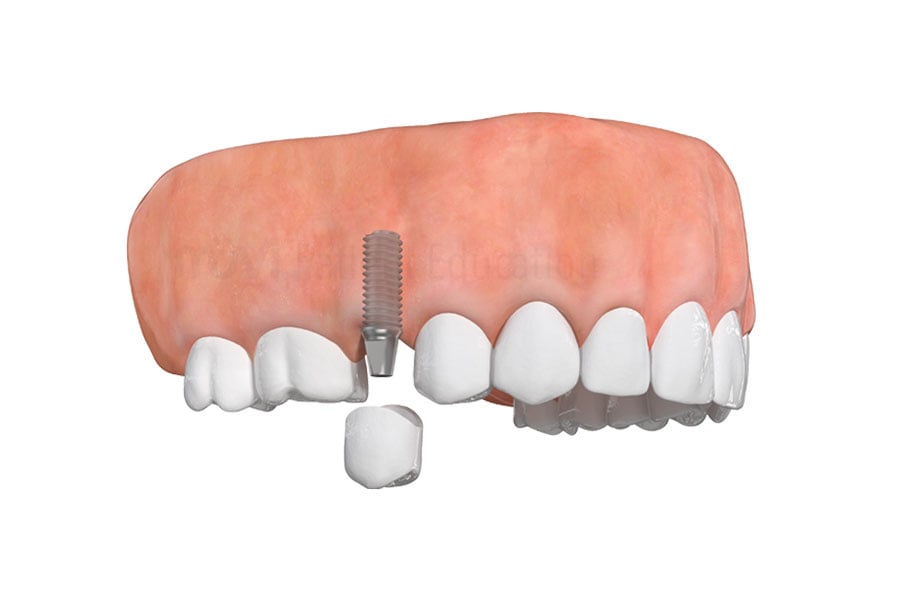
A custom porcelain crown sits atop a titanium post that is surgically set into the jawbone and fuses with it, replacing a missing tooth permanently from root to crown.
Who it's for
Anyone with a single gap who wants a natural-looking, permanent replacement that protects the bone and leaves the neighboring teeth untouched.
How we help
Precise placement guided by advanced digital imaging and CT scans, a treatment plan built around you, and a finished tooth that looks and works exactly like the one you lost.
Nothing comes closer to having your real tooth back than a dental implant. Book your consultation today.
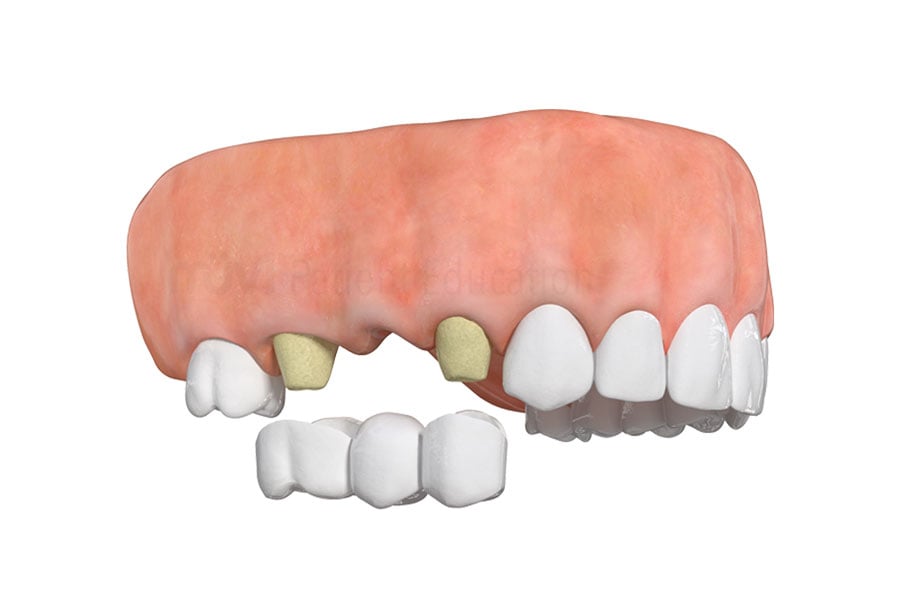
Dental Implant vs. Traditional Bridge
- Preserves neighbors: Because an implant supports itself, the healthy teeth beside it are never filed down or crowned
- Prevents bone loss: Like a natural root, the titanium post stimulates the jawbone and keeps it strong
- Lasts a lifetime: Cared for well, dental implants can last the rest of your life, whereas bridges usually need replacing every 10–15 years
- Easier to maintain: You brush and floss as usual, with no threading or special tools
- Natural feel: An implant looks, feels, and works just like your real tooth
- A traditional bridge leans on crowning the teeth on either side, which can wear them down over time
Why Choose an Implant?
- Looks natural: Set beside your real teeth, the new one is virtually impossible to spot
- Eat anything: Bite and chew with full confidence, with nothing off the menu
- Stays in place: Anchored permanently in the jawbone, so there is no slipping, shifting, or adhesive
- Protects your jaw: Stands in for the missing root and stops the bone deterioration that would otherwise follow
- One-time investment: Unlike bridges and dentures, implants are not refitted or replaced down the line
- Ask about flexible financing options that put implants within reach
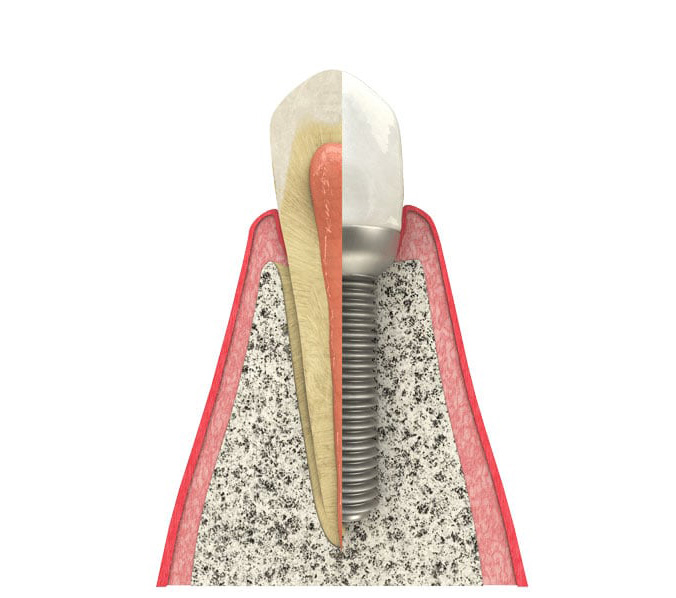
The Implant Process
- Consultation: Using digital X-rays and CT scans, our doctors study your teeth and build a precise treatment plan
- Implant placement: Under local anesthesia, a small titanium post is set into the jawbone
- Healing period: Over the next 3–6 months, the post fuses with the bone, a process called osseointegration
- Abutment: A connector piece is fitted onto the implant to hold the crown
- Crown placement: Topping it off, a custom porcelain crown is attached and your new tooth is complete
- Some cases call for bone grafting before the implant can be placed
Dental implants are the gold standard for tooth replacement. Find out if you're a candidate.
What to Expect at Your Visit
Visit Steps
- Evaluation: With advanced diagnostic imaging, our doctors examine your teeth and jawbone in detail
- Treatment plan: You leave with a personalized plan covering timeline, cost, and what each stage involves
- Implant surgery: Done under local anesthesia, and most patients describe the discomfort as minimal
- Healing: Across several months, the implant integrates with your jawbone
- Final restoration: Your custom crown goes on, and your new smile is complete
Helpful Tips
- Most patients are back to their normal routine the day after implant surgery
- Healing goes smoothly when you follow the post-operative care instructions closely
- While the site heals, keep hard and crunchy foods away from the implant
- Brush twice a day and floss around the implant to keep your hygiene excellent
- Keep every follow-up appointment so our doctors can track how healing is coming along
- Given proper care, your dental implant can last a lifetime
Frequently Asked Questions
From placement to final crown, most dental implant cases run 3 to 6 months. The reason it is measured in months rather than a single visit is healing: after the titanium post is placed, it needs time to fuse with the jawbone in a process called osseointegration, and that biological bond is what makes the implant so stable and long-lasting.
A few situations extend the timeline. If the tooth still needs to be removed, or if bone grafting has to rebuild the area first, those steps add their own healing time before the implant goes in. At your consultation, our doctors will map out each stage and give you a realistic schedule for your specific case.
The placement itself is not painful. The area is numbed with local anesthesia, so you do not feel the procedure while the dental implant post is being set into the jawbone. Many patients are surprised at how routine and comfortable the appointment turns out to be.
Afterward, there is usually some mild soreness as the area heals, and most patients say it is milder than they braced for, roughly on par with a simple tooth extraction. Over-the-counter pain medication is typically all that is needed, and any tenderness fades within a few days as the site settles down.
A dental implant is built to be a lifelong solution. The titanium post that anchors it into the jawbone is designed to be permanent, and once it has fused with the bone it functions like a natural tooth root. With good oral hygiene and regular checkups, many patients keep their implant for the rest of their lives.
The one part that may eventually need attention is the porcelain crown on top, which can show normal wear after 15 to 20 years and can be replaced without disturbing the implant beneath it. In other words, the foundation stays put while the visible tooth can be refreshed if it ever needs to be.
Most adults missing a tooth are good candidates for a dental implant. The single most important requirement is enough healthy jawbone to support and surround the post, since that is what holds the implant securely. A few factors go into the assessment:
- The volume and density of bone at the site, which bone grafting can rebuild if it has been lost.
- Healthy gums free of active infection or untreated gum disease.
- Good general health and habits that support healing, such as not smoking during recovery.
None of these is necessarily a dealbreaker; many are simply addressed first. With digital imaging, our doctors can assess your situation and let you know whether a dental implant is right for you.
The cost of a dental implant depends on the specifics of your case, including whether a tooth needs to be removed first and whether bone grafting is part of the plan. Because an implant replaces the tooth from root to crown, its price reflects several components: the post, the abutment, and the custom crown.
An implant can cost more upfront than a bridge, but it is often the better long-term value, since a well-cared-for dental implant can last a lifetime while bridges are typically replaced every 10 to 15 years. Across our Orland Park, Frankfort, and Oak Lawn offices we offer flexible financing options to keep treatment accessible, and you will receive a clear estimate before anything begins.
A single gap rarely stays a single problem. When a tooth is missing, the teeth on either side begin to tip and drift into the empty space, the tooth above or below it can start to over-erupt, and your bite gradually shifts out of alignment. Those changes can make chewing harder and put neighboring teeth at greater risk of decay and gum disease.
There is also what you cannot see: the jawbone that once supported the tooth root begins to shrink away without stimulation. The longer the gap is left, the more bone is lost, which is why replacing a missing tooth with a dental implant sooner rather than later usually means simpler, less costly treatment.
Yes, and it is one of the most common questions we hear. A tooth that has been missing for years often means the jawbone in that spot has gradually thinned, since the bone needs the stimulation of a root to maintain its volume. That does not rule out a dental implant; it simply means the foundation may need to be rebuilt first.
In those cases, bone grafting restores enough healthy bone to anchor the implant securely, after which the implant process proceeds as usual. Using digital imaging, our doctors can check your bone density and recommend the best path to restore both the bone and the tooth.
Bring your smile back for good. Book your dental implant consultation today.