Dental Implants in Oak Lawn, IL
Missing One Tooth (Single Implant) is available at these locations:
A missing tooth affects more than your smile. It can lead to bone loss, shifting teeth, and difficulty chewing. At Aesthetic Dentistry, our Oak Lawn team places dental implants that look, feel, and function just like your natural teeth. Implants are the only tooth replacement that preserves your jawbone and protects the health of surrounding teeth, giving you a permanent, confident smile.
What it is
A titanium post surgically placed into the jawbone that fuses with the bone and supports a custom porcelain crown, permanently replacing a missing tooth from root to crown.
Who it's for
Anyone missing a single tooth who wants a permanent, natural-looking replacement that preserves bone and doesn't require altering neighboring teeth.
How we help
Advanced digital imaging and CT scans for precise placement, custom treatment planning, and a restoration that looks and functions exactly like your natural tooth.
A dental implant is the closest thing to getting your real tooth back. Schedule your consultation today.
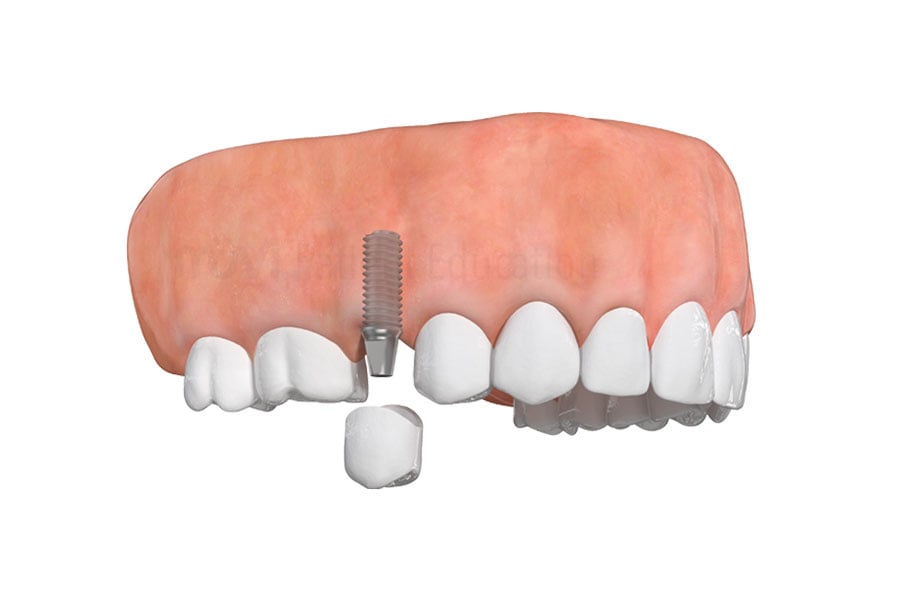
Dental Implant vs. Traditional Bridge
- Preserves neighbors: An implant stands on its own, with no filing down or crowning of healthy adjacent teeth
- Prevents bone loss: The titanium post stimulates the jawbone just like a natural root, keeping it strong and healthy
- Lasts a lifetime: With proper care, dental implants can last your entire life. Bridges typically need replacement every 10–15 years
- Easier to maintain: Brush and floss normally, with no special tools or threading required
- Natural feel: An implant looks, feels, and functions exactly like your real tooth
- A bridge relies on crowning the teeth on either side, which can damage them over time
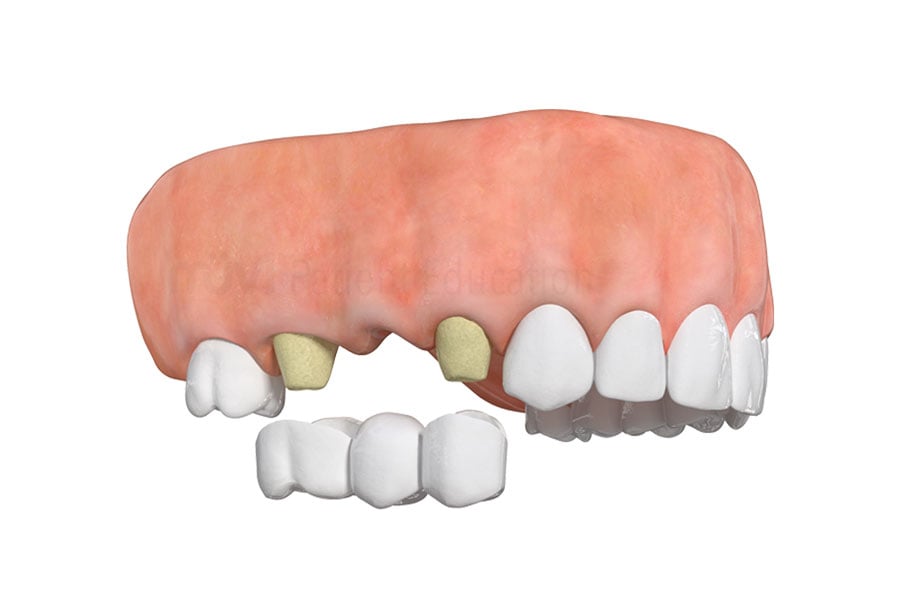
Why Choose an Implant?
- Looks natural: Your new tooth is virtually indistinguishable from your real teeth
- Eat anything: No dietary restrictions, so you can bite and chew with full confidence
- Stays in place: Permanently anchored in your jawbone, with no slipping, shifting, or adhesives
- Protects your jaw: Prevents the bone deterioration that occurs when a tooth root is missing
- One-time investment: Implants don't need to be refitted or replaced like bridges and dentures
- Learn about flexible financing options to make implants affordable
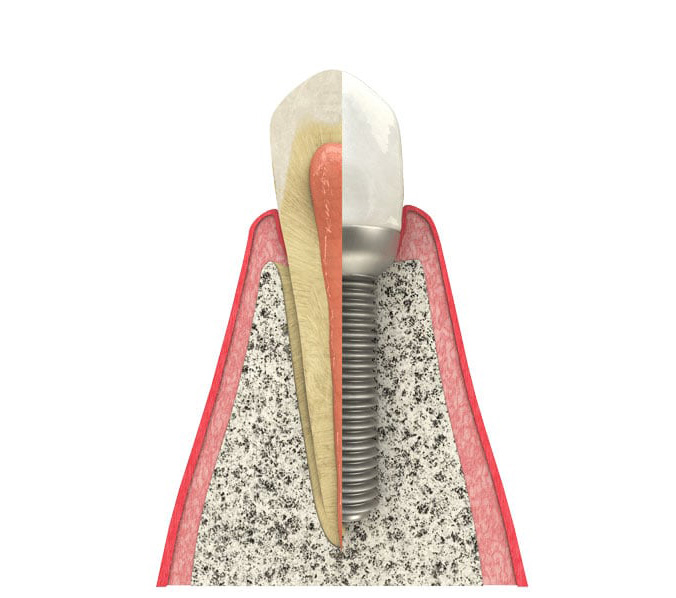
The Implant Process
- Consultation: our Oak Lawn team examines your teeth with digital X-rays and CT scans to create a precise treatment plan
- Implant placement: A small titanium post is placed into the jawbone under local anesthesia
- Healing period: Over 3–6 months, the implant fuses with the bone in a process called osseointegration
- Abutment: A connector piece is placed on the implant to support the crown
- Crown placement: A custom porcelain crown is attached, completing your new tooth
- In some cases, bone grafting may be needed before implant placement
Dental implants are the gold standard for tooth replacement. Find out if you're a candidate.
What to Expect at Your Visit
Visit Steps
- Evaluation: our Oak Lawn team thoroughly examines your teeth and jawbone using advanced diagnostic imaging
- Treatment plan: You receive a personalized plan including timeline, cost, and what to expect at each stage
- Implant surgery: The procedure is performed under local anesthesia, and most patients report minimal discomfort
- Healing: The implant integrates with your jawbone over several months
- Final restoration: Your custom crown is placed, completing your new smile
Helpful Tips
- Most patients return to normal activities the day after implant surgery
- Follow post-operative care instructions carefully to ensure successful healing
- Avoid hard or crunchy foods near the implant site during the initial healing period
- Maintain excellent oral hygiene by brushing twice daily and flossing around the implant
- Attend all follow-up appointments so our Oak Lawn team can monitor healing progress
- With proper care, your dental implant can last a lifetime
Frequently Asked Questions
For most patients, the dental implant process spans 3 to 6 months from the day the post is placed to the day the final crown goes on. The bulk of that time is healing: the titanium implant needs to fuse with the jawbone, a natural process called osseointegration, and that bond is exactly what gives an implant its lasting strength.
Certain cases run longer. If a tooth still has to be extracted, or if bone grafting is needed to build up the bone first, those steps add healing time of their own. At your consultation, our Oak Lawn team will walk you through each stage and give you a realistic timeline for your case.
Not during the procedure. The area is fully numbed with local anesthesia before the dental implant is placed, so you should not feel pain while the post is being positioned in the jawbone. Most patients find the appointment far more straightforward than they had imagined.
Once the numbness wears off, expect some mild soreness while the site heals. Patients routinely describe it as no worse than a simple tooth extraction, and over-the-counter pain medication is usually enough to stay comfortable. The tenderness generally settles within a few days.
A dental implant is designed to last a lifetime. The titanium post is made to become a permanent part of your jaw, and once it has integrated with the bone it works just like a natural root. Paired with good oral hygiene and routine checkups, many implants serve their owners for the rest of their lives.
The crown that sits on top is the only piece that may eventually need replacing, typically after 15 to 20 years of everyday wear. When that time comes, the crown can be renewed without touching the implant underneath, so the foundation you invested in stays right where it is.
The majority of adults who are missing a tooth make good candidates for a dental implant. What matters most is having enough solid jawbone to hold the post in place, along with healthy gums to surround it. When you come in, a few things are evaluated:
- Whether there is sufficient bone, since bone grafting can restore it where it has been lost.
- The health of your gums and whether any gum disease needs treating first.
- Overall health and habits that affect healing, including smoking.
Very few people are ruled out entirely; more often, any gaps are simply addressed before treatment. A short evaluation with digital imaging is all it takes to confirm whether a dental implant is right for you.
The price of a dental implant comes down to the details of your case, such as whether the tooth still needs removing and whether bone grafting is required. Since an implant rebuilds the tooth from root to crown, the total reflects each part: the post, the abutment that connects to it, and the custom porcelain crown on top.
An implant often costs more at the outset than a bridge, yet because a well-maintained dental implant can last a lifetime, it frequently proves the more economical choice over time. We offer flexible financing options to keep treatment within reach, and you will see a clear estimate before any work begins.
Leaving a gap sets a series of changes in motion. The neighboring teeth gradually lean and slide toward the empty space, the opposing tooth can begin to drift out of its socket, and your bite shifts in ways that can make chewing less comfortable. Teeth that tilt out of position are also harder to clean, which raises the risk of decay and gum disease.
Out of sight, the jawbone beneath the gap starts to recede because it no longer has a root to stimulate it. That bone loss compounds the longer the space is left open, so replacing the tooth with a dental implant promptly usually keeps treatment simpler and more affordable than waiting.
In most cases, yes. A tooth that has been gone for a long time often leaves behind a thinner ridge of jawbone, because bone slowly recedes once the root that stimulated it is gone. That is a very common situation and rarely a reason you cannot have a dental implant.
When the bone has diminished, bone grafting rebuilds a healthy, stable base, and the implant is placed once that foundation has healed. A digital imaging exam shows exactly how much bone is present and helps determine the best plan to restore both the bone and the missing tooth.
Right here at Aesthetic Dentistry of Oak Lawn. From the planning scans to placing the post and fitting your final crown, your entire dental implant treatment is handled at this office, so there is no need to be referred elsewhere for the work.
Your first step is a consultation, where your tooth, your gums, and your jawbone are evaluated to confirm a dental implant is the right way to fill the gap. When you are ready to move forward, you can request an appointment online or call the office.
Get your smile back, permanently. Schedule your dental implant consultation today.